Pharaonic Cartouches
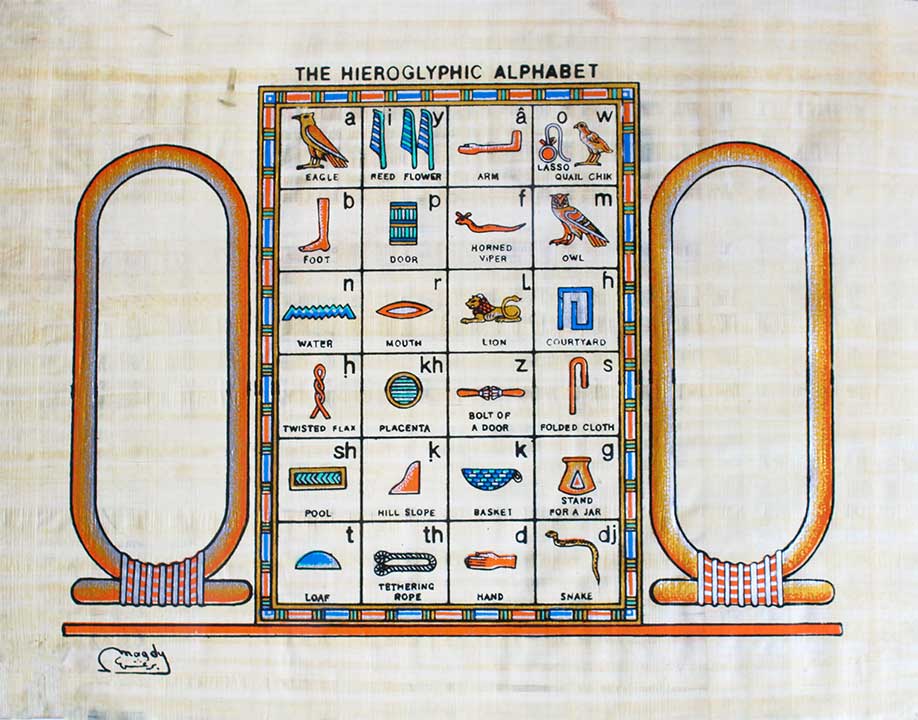
Description
Royal cartouches were used to record the names and titles of the pharaohs of ancient Egypt on places such as temples and tombs. This article provides a historical context for understanding the significance of these cartouches.
An important component of pharaonic script is the cartouche, a geometric design. Cartouches, which are geometric shapes, were utilised as a crown or as highlighting brackets to draw attention to the space in between. Below is further data about the pharaonic cartouches.
Ancient Egyptian honorifics found on cartouches
The name “Ibn Ra” appears among a list of kings’ titles in a cartouche, which takes the form of a geometric oval.
Though cartouches were primarily used for tomb decoration, rulers often wore them as amulets because of the widespread belief that they warded off evil spirits.
Due to its widespread adoption, the cartouche has come to represent good fortune and safety from harm.
French soldiers originally adopted the term “cartouche” after seeing it carved repeatedly into Egyptian antiquities.
The French soldiers gave it this moniker because they saw similarities between the shape and that of gunpowder.
The ancient Egyptian word for “circle” was “Shen,” hence the modern use of the term “Shenna” to refer to someone in a prestigious social position.
Note
Agents
Similar Products
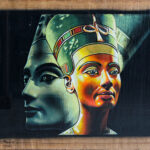 Queen Nefertiti